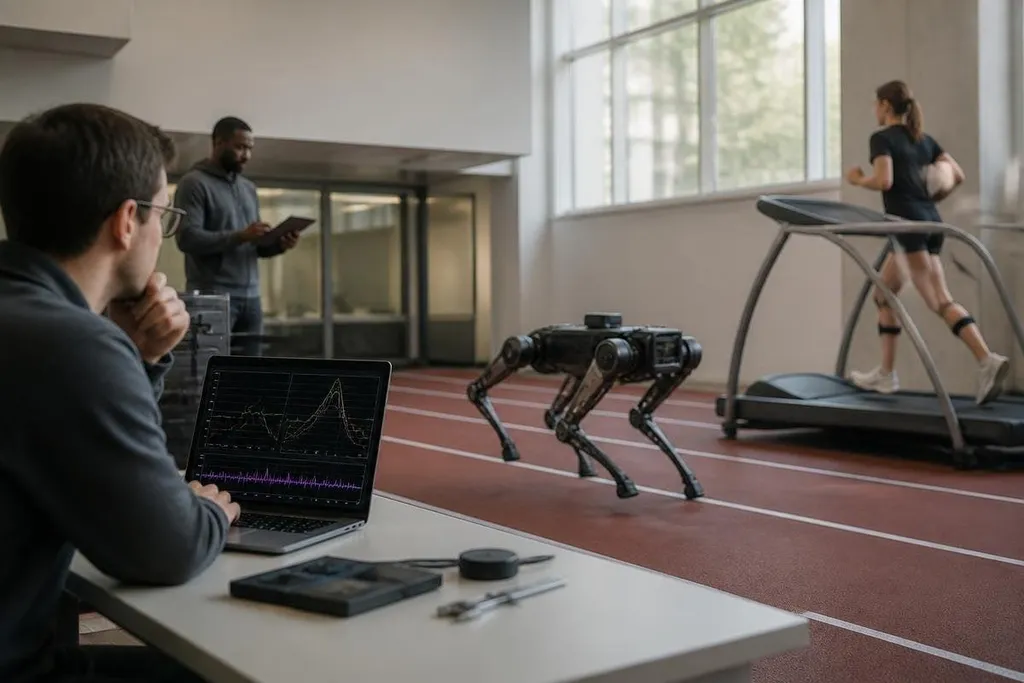
A robot that wins a race, lands a jump, or helps an athlete train can make a good video. It still needs measured results before it earns a place among sports robotics’ biggest advances. This guide shows what proof matters when you compare machines across very different sports.
- Performance: Did the robot improve a measured result?
- Control: Can it repeat the task outside a staged demo?
- Use: Does an athlete, coach, or official gain something practical?
Sports robotics covers several kinds of work. A machine may train an athlete, assist movement, collect live data, maintain a playing surface, or take part in the sport itself. Those jobs need different tests, so a single ranking can mislead you.
A training robot should be judged by repeatability and safety. An assistive system needs evidence about fit, control, and the person using it. A competing machine needs results from a clear course or match, with the rules and conditions stated.
The first question is precise: what did the robot do that people or older machines could not do as well? “Better” needs a measure beside it, such as time, accuracy, force, energy use, or the number of successful attempts.
What counts as a real advance
A useful claim has three parts. It names the task, gives the test result, and explains the setting. One completed movement has shown a capability. Repeating it under stated conditions has shown a system that may work in practice.
Repeatability matters because sports place changing demands on machines. Lighting, surface grip, contact with equipment, player movement, and weather can all affect a robot’s sensors and control software. A result from a fixed lab setup tells you less than a result from the field where the robot will operate.
The source also matters. A maker’s demonstration can show what the team built, but it may leave out failed runs, operator input, or edits between attempts. A test report, match record, or named research paper gives you more to check.
Competition results can hide the setup behind a clean run. Dated sports robotics reports from Robot24.com can place a team's claim beside the event, robot, test conditions, and result.
The evidence gaps to watch
A sports robot may look ready long before it is ready for regular use. The missing details often decide whether the work has value.
Look for these facts before accepting a large claim:
- Test count: Record how many attempts succeeded and how many failed.
- Human input: Note whether a person steered, corrected, or reset the robot.
- Test setting: Identify whether the trial took place in a lab, training area, or live event.
- Safety limits: Record the speed, force, distance, or contact rules that applied.
- Repeat cost: Check the time, staff, and equipment each run needed.
- Independent review: Look for a report from a group outside the maker.
A video can still matter because it may show a movement that challenged earlier systems or reveal a control method worth testing. Video alone can't tell you how often the robot failed or how much human work sat outside the frame.
A practical guide for ranking the field
Use this order when you compare candidate advances:
- Write down the exact task and the result claimed.
- Check the date, test site, rules, and equipment.
- Separate autonomous action from remote control.
- Compare the result with a named earlier system or human baseline.
- Mark every missing figure as unproven.
I'd leave any “biggest breakthrough” ranking open until each machine has this record. Sports robotics deserves attention, but attention isn't the same as evidence.
The next useful list will need named robots, dated trials, measured results, and clear limits. Without those four pieces, the honest ranking is still waiting.